

By Shakeel Ahmed
At first glance, Manglawar looks like an ordinary village in the Swat Valley. Farmers work their fields, children attend schools and people move through the narrow streets of a settlement surrounded by mountains. But beneath this ordinary appearance lies a history that stretches across more than two millennia. Local accounts and historical references connect Manglawar with Alexander the Great’s invasion, the Buddhist civilisation of ancient Swat and the later rule of Sultan Owais. Scattered across its mountains are rock carvings, inscriptions and archaeological remains that suggest that this was once far more than a village.
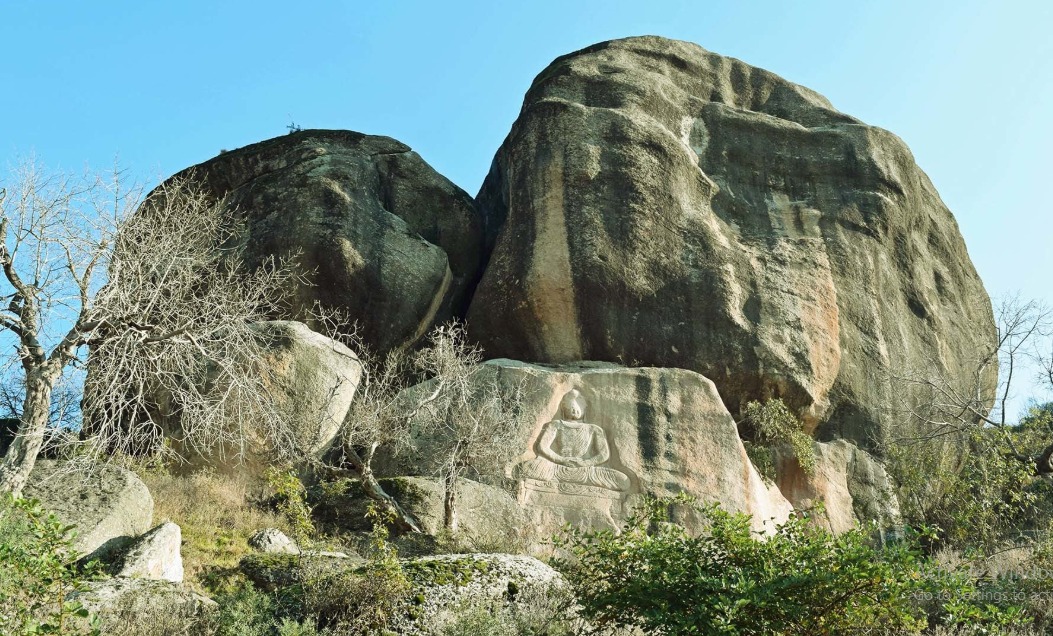
Manglawar is located about eight kilometres north of Mingora and stands at an elevation of around 987 metres, or 3,238 feet, above sea level. Today, nearly more than 45,000 people live here. Most are Pashto-speaking, while communities living in the surrounding mountains also speak Gujri and Ajri. Urdu and English are widely understood. Agriculture, government employment and labour abroad are among the major sources of income. Yet the modern life of Manglawar sits on top of an older landscape whose history is still being debated.

Even the origin of the village’s name has more than one explanation. According to the local the word Mang was associated with an area where thousands of Buddhist scholars once lived. According to them, prefixes and suffixes were gradually added to the word over time, producing names found in different parts of Swat, Buner and Hazara. Lawyer Hakim Zai offers another interpretation in his book Dagha Zmong Kelay De. He writes that Mangal is a Sanskrit word associated with prosperity and argues that Manglawar is a combination of Mangal and “Ur”, giving it the sense of a place of peace, prosperity and fertility.
The more important question, however, is not what the name means but what the village once represented.
According to research cited by Professor Atta-ur-Rehman Atta, Manglawar had served as the capital of a Buddhist state before the arrival of the Yousafzais in Swat. Historical references, including the Baburnama and Tawarikh-i-Hafiz Rahmat Khani, are cited in support of the existence of Sultan Owais, who is believed to have ruled the region from Manglawar. Some accounts refer to the settlement as Manglapura, while others have associated it with the ancient name Massaga. But this is where the historical trail becomes complicated. The identification of Massaga with present-day Manglawar is not universally accepted among archaeologists and historians.
The claim is nevertheless significant because Massaga appears in accounts of Alexander the Great’s campaign in the region. Sir Alexander Cunningham, one of the pioneers of archaeology in British India, wrote that Alexander’s campaign in Swat in 327 BC involved a major assault on Massaga. Later researchers have also suggested that Massaga may have been located at or near present-day Manglawar. If that identification is correct, the village could have been one of the places that witnessed the Macedonian ruler’s military campaign more than 2,300 years ago. But rather than presenting this as settled fact, historians need to establish the location through stronger archaeological and textual evidence.
Centuries later, another famous visitor left a record of the region. The Chinese Buddhist monk and traveller Xuanzang travelled through Swat and recorded settlements whose names have been interpreted as Mang-kli or Mang-chili. His account adds another layer to the historical significance of the area, particularly because Swat was an important centre of Buddhism and learning during this period.
The strongest physical evidence of Manglawar’s Buddhist past is found at Jahanabad, where a monumental image of Buddha has been carved directly into a mountainside. The Jahanabad Buddha is generally dated to either the sixth or seventh century AD. It is widely described as one of the largest rock-carved Buddha figures in the world, following the famous Bamiyan Buddhas of Afghanistan. More than 200 steps lead towards the monument, and from the site the Swat River and surrounding valley can be seen stretching into the distance.
But the Buddha also tells a much darker story one that links ancient heritage with the violence that engulfed Swat in recent decades.
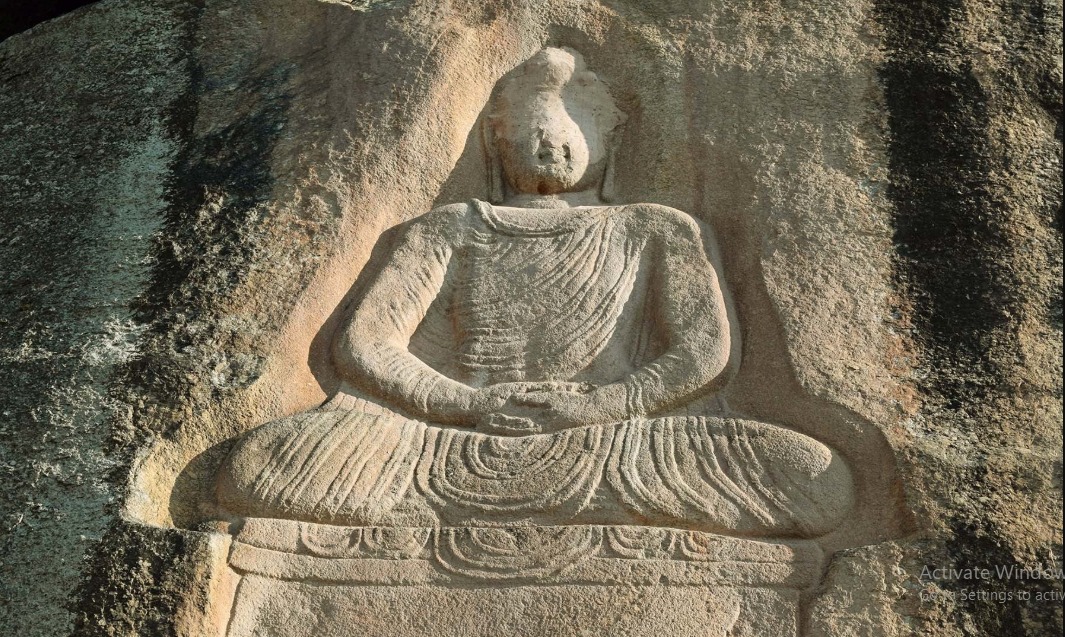
During the period of militancy, the monument was deliberately targeted. Its face was drilled and explosives were subsequently used to destroy it. Attempts were reportedly made twice to damage the sculpture. The destruction turned what had survived for roughly 1,500 years into a symbol of the vulnerability of cultural heritage in times of conflict. The Italian Archaeological Mission later carried out conservation work to prevent further deterioration. Restoration, however, remains a difficult task because the original stone surface has been permanently damaged.
The Jahanabad Buddha is not the only archaeological treasure in the area.
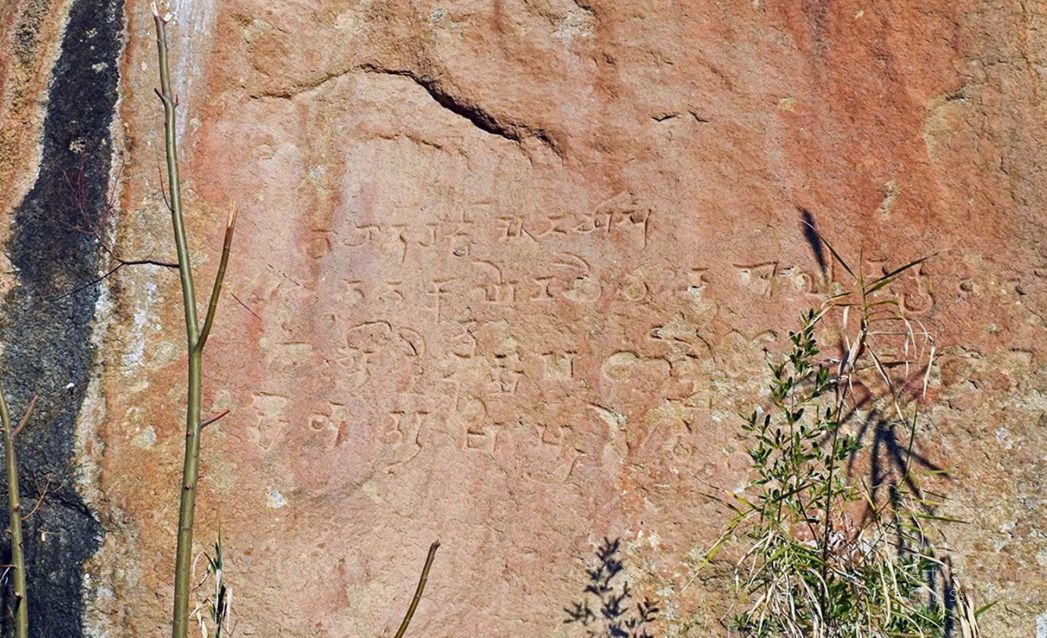
In Jahanabad, a large rock bears an inscription in Sanskrit that has been dated to the third century AD. Such inscriptions are particularly important because they can provide direct evidence about the people, language, religion and political conditions of the period. Yet much of Manglawar’s archaeological landscape remains outside the attention it deserves.
These stories are important, but they also illustrate a wider problem in documenting the history of Swat: oral traditions, historical chronicles and archaeological evidence do not always tell exactly the same story. Some claims are supported by written sources, some survive through local memory, while others remain subjects of scholarly debate. Separating established evidence from local tradition is therefore essential if Manglawar is to be presented as a serious archaeological and historical site rather than simply a collection of legends. Modern Manglawar, meanwhile, has developed far beyond its archaeological past. The village has 39 primary schools, five middle schools, three high schools and one higher secondary school, according to local accounts. Social worker Dr Javed says a local survey estimated the literacy rate at around 89 per cent, rising to almost 100 per cent if residents of the surrounding mountainous areas are excluded. He also points to an unusual feature of village life: many households maintain personal libraries.
The economic life of Manglawar is similarly tied to its fertile landscape. Wheat, sorghum and other grains are cultivated in abundance. Radish, turnip, spinach and mustard greens produced here are known across the region, while peaches, persimmons, apricots and plums are grown in quantities that exceed local consumption. The village is also known for its inexpensive traditional sandals, which are sold throughout Swat.
Manglawar’s transformation from an ancient centre of political and religious importance into a densely populated modern village raises an uncomfortable question: what happens to archaeological heritage when it exists in the middle of everyday life?
Unlike isolated ruins protected behind museum walls, Manglawar’s heritage is part of the living landscape. People farm around it, walk past it and build their homes within the same historical environment. Without proper documentation, conservation and community involvement, archaeological remains can gradually disappear — not necessarily through deliberate destruction, but through neglect, construction, erosion and the simple pressure of a growing population.
This is why Manglawar deserves more than occasional references in accounts of Swat’s tourism potential. The village should be investigated as a historical landscape in its own right. The location of ancient settlements, the identity of Massaga, the Sanskrit inscriptions, the Buddhist remains and the traditions surrounding Sultan Owais all require systematic study. Archaeologists and historians should distinguish clearly between what has been scientifically established and what survives as oral tradition.
For the people of Manglawar, however, the issue is not simply academic. Their village contains a history that could become an important part of Swat’s cultural and tourism economy if it is properly protected and interpreted. Archaeological sites can attract visitors, create local employment and encourage communities to become custodians of their own heritage. But tourism without conservation can become another threat. Manglawar therefore presents a paradox. It is a village whose past appears extraordinarily rich, yet much of that past remains poorly understood and insufficiently protected. Its stones have survived ancient wars, changing kingdoms and modern conflict. The Jahanabad Buddha survived for centuries but could not escape the violence of its own time.
The question now is whether the next threat will be neglect.
If the historical claims surrounding Manglawar are properly investigated, its archaeological remains documented and its surviving monuments protected, the village could emerge as one of Swat’s most significant cultural destinations. Until then, its history remains scattered across mountainsides, inscriptions and local memories waiting for someone to put the pieces together.
About:
Shakeel Ahmed is a freelance journalist and media professional from Gilgit-Baltistan, holding a Master’s in Strategic Studies from the National Defence University, Islamabad. Currently working as Associate Producer at Pakistan TV.


